
Pouch options
Drainable, Closed-End, and Urostomy Pouches
Learn how drainable, closed-end, and urostomy pouches differ and which features to discuss when choosing ostomy supplies.
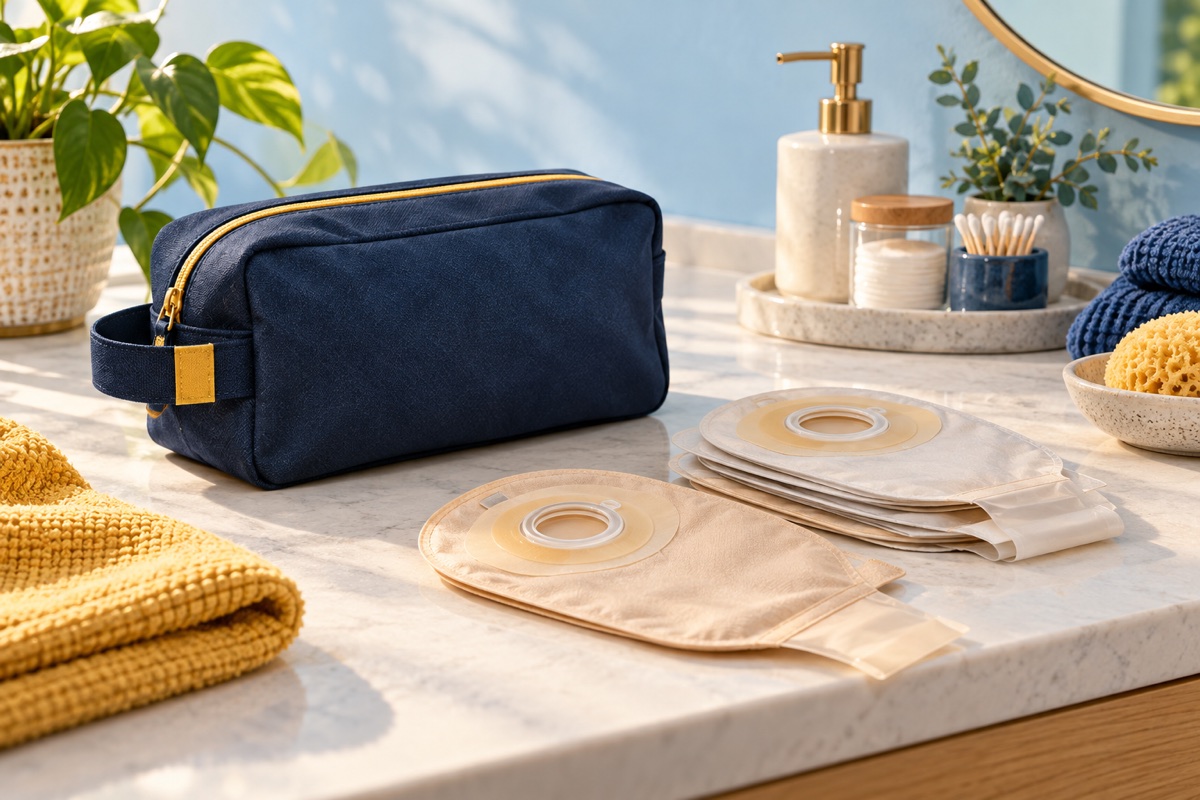
Illustrative image. Product shapes and features vary.
Two pouches can look similar on a website and work very differently. Along with choosing a one-piece or two-piece system, you need a pouch designed for the output from your stoma. The outlet is one of the most useful features to check.
Drainable pouches for stool
A drainable pouch opens at the bottom so you can empty it and close it again. Closures vary and may use an integrated fastener or a separate clip. Your nurse can help you practise opening, cleaning, and securing the outlet.
This style is commonly used when stool is loose or needs to be emptied frequently. Emptying the pouch does not replace the need to change the barrier and pouch according to your care plan.
Closed-end pouches
A closed-end pouch has no emptying outlet. You remove and dispose of the used pouch. It may suit some people with formed stool, depending on their output and routine.
With a compatible two-piece system, the pouch can be replaced separately from the barrier. With a one-piece closed-end system, the barrier comes off with the pouch. Consider how often you would need to do that and discuss the effect on your skin with your nurse.
Urostomy pouches
A urostomy pouch collects urine and has a drainage tap or valve. These products are designed for urinary drainage rather than stool. Many also have an anti-reflux feature and connections for compatible overnight drainage equipment.
Have your care team demonstrate the tap and any night-drainage connection. Check whether an adapter is required and follow the equipment's cleaning and replacement instructions. A stool pouch is not an interchangeable substitute.
Check the details that affect everyday use
Think about whether you prefer a clear or opaque pouch, how the outlet feels in your hands, and how the pouch sits under your usual clothing. If you choose a filtered pouch, check its instructions for bathing and swimming.
Before your next order: Confirm the pouch type, closure, size, and compatibility. A familiar brand name does not tell you all of those details.
General education only. Follow your care team's advice and the instructions for your specific products. An NSWOC (Nurse Specialized in Wound, Ostomy and Continence) can help assess your individual needs.
Sources & further reading
- American Cancer Society — Colostomy Care
- American Cancer Society — Urostomy Care
- WOCN Society — Basic Ostomy Skin Care
Back to Articles & Advice · Questions about ordering? Contact us